

|
|
Por favor, use este identificador para citar o enlazar este ítem:
https://repositorio.utn.edu.ec/handle/123456789/19341| Título : | Estrategias psicoeducativas para mitigar el Síndrome de Burnout en el personal de salud del Hospital Básico de Machachi |
| Director: | Yarad Salguero, William Saud |
| Autor : | Catani Wampankit, Mercedes Alexandra Vinces Guerrero, Carla Gabriela |
| Tipo docuemento: | bachelorThesis |
| Palabras clave : | SÍNDROME DE BURNOUT;SALUD OCUPACIONAL;ESTRATEGIAS PSICOEDUCATIVAS;ESTRÉS LABORAL |
| Keywords : | OCCUPATIONAL HEALTH;WORK-RELATED STRESS;BURNOUT SYNDROME;HEALTHCARE PERSONNEL |
| Fecha de publicación : | 19-mar-2026 |
| Fecha de creación : | 17-mar-2026 |
| Resumen : | El presente Trabajo de Integración Curricular tuvo como objetivo evaluar los niveles del Síndrome de Burnout en el personal de salud del Hospital Básico de Machachi y analizar su relación con variables sociodemográficas, con el fin de diseñar estrategias psicoeducativas orientadas a su mitigación. Se desarrolló bajo un enfoque cuantitativo, con diseño no experimental, alcance descriptivo–correlacional y corte transversal. La recolección de datos se realizó mediante evaluación psicométrica aplicada de forma virtual (Google Forms), utilizando el Maslach Burnout Inventory (MBI) y una ficha sociodemográfica (edad, género y área de trabajo). La muestra estuvo conformada por 85 participantes, seleccionados mediante muestreo no probabilístico por conveniencia, pertenecientes a distintas áreas del hospital; predominó el género femenino (80,0%) y los servicios con mayor participación fueron Emergencias (35,3%;) y Hospitalización (29,4%). A nivel general, los resultados evidenciaron un perfil de riesgo moderado. En estrés total, el 91,8% se ubicó en nivel medio (n=78), el 7,1% en nivel alto (n=6) y el 1,2% en nivel bajo (n=1). En las dimensiones del burnout, el agotamiento emocional predominó en nivel medio (57,6%; n=49), la despersonalización se mantuvo principalmente baja (78,8%; n=67) y la realización personal se concentró en nivel medio (61,2%; n=52). La distribución cruzada mostró que los casos de estrés alto se concentran sobre todo en Hospitalización (n=3) y Emergencias (n=2). En el análisis correlacional de Pearson, el estrés se asoció de manera positiva y significativa con el agotamiento emocional (r=.694; p<.001) y con despersonalización y realización personal (r=.644; p<.001 en ambas). No se hallaron relaciones significativas entre estrés y género (r=−.173; p=.114) ni entre estrés y edad (r=−.051; p=.644). Se concluye que el desgaste está presente como cansancio sostenido, aún sin despersonalización severa, lo que constituye una ventana preventiva. Se recomienda implementar un programa psicoeducativo institucional de intervención y un seguimiento preventivo. |
| Abstract: | This Integrative Curriculum Project aimed to assess burnout levels among healthcare staff at the Hospital Básico de Machachi and to analyze their relationship with sociodemographic variables, in order to design psychoeducational strategies for mitigation. A quantitative approach was used, with a non-experimental design, descriptive–correlational scope, and cross-sectional data collection. Data were gathered through virtual psychometric assessment (Google Forms) using the Maslach Burnout Inventory (MBI) and a sociodemographic questionnaire (age, gender, and work area). The sample consisted of 85 participants selected through non-probabilistic convenience sampling from different hospital departments; the majority were women (80.0%), and the most represented services were Emergency (35.3%) and Hospitalization (29.4%). Overall results indicated a moderate risk profile. Regarding total stress, 91.8% of participants fell within the moderate level (n=78), 7.1% within the high level (n=6), and 1.2% within the low level (n=1). For burnout dimensions, emotional exhaustion was mainly moderate (57.6%; n=49), depersonalization was predominantly low (78.8%; n=67), and personal accomplishment was mostly moderate (61.2%; n=52). Cross-tabulation showed that high-stress cases were concentrated mainly in Hospitalization (n=3) and Emergency (n=2). Pearson correlation analyses revealed that stress was positively and significantly associated with emotional exhaustion (r=.694; p<.001) and with depersonalization and personal accomplishment (r=.644; p<.001 for both). No significant relationships were found between stress and gender (r=−.173; p=.114) or between stress and age (r=−.051; p=.644). It is concluded that burnout is present primarily as sustained fatigue, without severe depersonalization, representing a preventive window. Institutional implementation of a psychoeducational intervention program and preventive follow-up is recommended. |
| URI : | https://repositorio.utn.edu.ec/handle/123456789/19341 |
| Ubicación: | FECYT/5169 |
| Ciudad. País: | Machachi |
| Grado Académico: | Licenciatura |
| Código MFN : | 0000046819 |
| Carrera Profesional: | Licenciatura en Psicología |
| Aparece en las colecciones: | Psicología |
Ficheros en este ítem:
| Fichero | Descripción | Tamaño | Formato | |
|---|---|---|---|---|
| FECYT 5169 LOGO.jpeg | LOGO | 275.8 kB | JPEG | 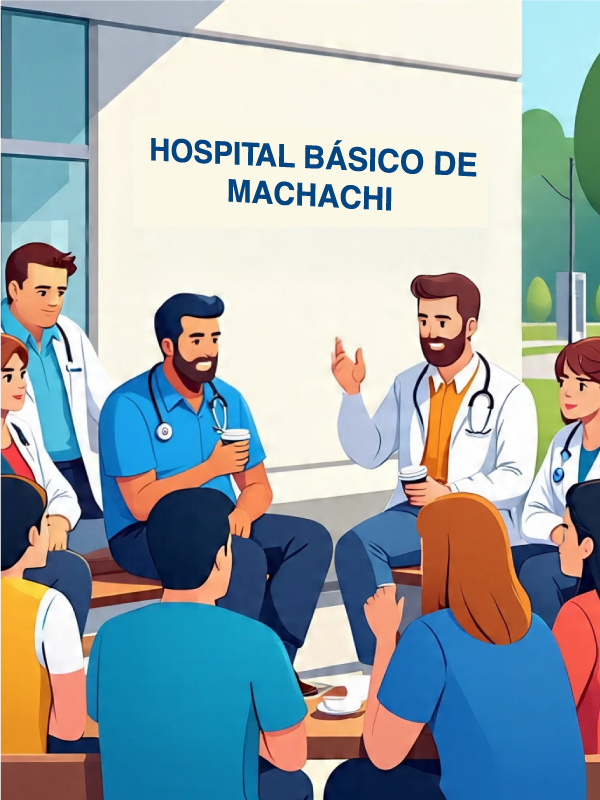 Visualizar/Abrir |
| FECYT 5169 TESIS.pdf | TRABAJO DE GRADO | 850.58 kB | Adobe PDF |  Visualizar/Abrir |
Este ítem está protegido por copyright original |
Este ítem está sujeto a una licencia Creative Commons Licencia Creative Commons

